STM for maintenance/self-care

Monday 26th April 2022

Hours: 3

Patient presentations:

  1. STM for maintenance of lower back ‘stiffness’ – patient also had an injured arm but was not looking for treatment of this.
  2. STM for maintenance of lower back ‘stiffness’ – patient also had an injured shoulder but was not looking for treatment of this.

Reflection Focus

  • STM for perceived lower back stiffness.

Reflection Model

  • Gibbs Reflective Cycle 1988

What Happened?

  • 2 patients both requested STM for the lower back.
  • No particular concern or injury, both used the phrase, ‘too keep on top of it’ regarding stiffness.

 What were you thinking and feeling? 

  • I remember not really looking forward to two hours of massage, particularly when I learned that there was no injury or complaint to treat.

Analysis and Evaluation

  • I failed to complete any outcome measures for both these patients which was not correct practice. Even though they had no specific complaint, I still could have assessed ROM.
  • I used a few STM techniques (efffluerage, petrissage, and TrPs’); however, I could have used mobilisations (PA) as they were both reporting stiffness.
  • I also failed to consider any psychosocial factors underpinning their desire for STM treatment.
  • Overall, I think my disappointment of not having a pathology or injury to work with resulted in my lack of thorough assessment and investigations.

 Conclusion 

  • The next STM I have in clinic, I will remember to complete an appropriate outcome measure and consider psychosocial factors during assessment and/or treatment.

Revisiting Reflection


References

Suspected WAD

Monday 14th March 2022

Hours: 3

Patient presentations:

  1. Netball player with suspected WAD
  2. Football player – lateral ankle sprain

Reflection Focus

  • Suspected WAD – Grade 2

Reflection Model

  • Gibbs Reflective Cycle 1988

What Happened?

  • Patient’s 2nd visit to clinic – I observed her first visit whilst she was treated by another therapist.
  • Patient fell during a game of netball and fell backwards. She was unsure if the back on her neck hit the opposing player first of if she hit the ground first.
  • Reporting pain and tightness during flexion and extension – extension is particularly painful. After the initial injury she was taken off the field of play and concussion was ruled out by a therapist on site.
  • Pain leads up to the occiput and the patient is also complaining of tightness in UFT.
  • Reported headaches and dizziness after the trauma but this dissipated within 2 days
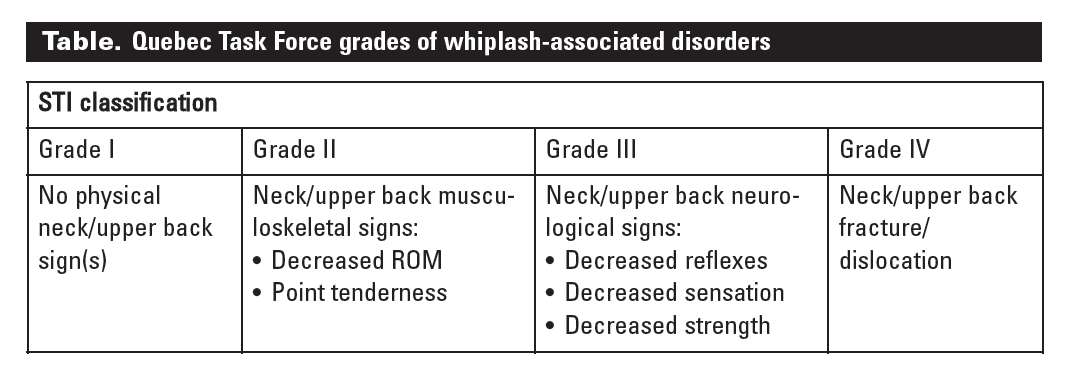
  • Patient is now 3 weeks post-trauma – according to the Quebec Task Force classification system the patient fits into the grade 2 classification. As she has decreased ROM and can pin point an area of tenderness on her neck.

  • Treatment was STM and MET to relieve UFT tightness – effleurage and petrissage. Pt reported slight improvement in regards ride sided tightness.
  • MET of UFT – pt experienced a painful tightness.
  • Pin and stretch technique not tolerated due to pain.
  • Exercises – Chin tucks against gravity and chin tucks with flexion.
  • Discussed DSE as patient reported that sitting for long periods at her desk aggravate symptoms.

 What were you thinking and feeling? 

  • This is the first time in clinic I can say that I genuinely felt tightness in a muscle compared to the muscle on the opposite side. The patients R UFT had obvious and palpable increased tone/tension. The treatment I offered seemed mildly effective. Other treatments that I thought would be beneficial; however, could not be tolerated due to pain. This was frustrating, I am sure for the patient also, but I didn’t want to invoke too much pain that it promoted further guarding.

Analysis and Evaluation

  • I remembering being taught about whiplash but I couldn’t really remember anything in regards to treatment. In this instance I just applied the basics of rehabilitation – I identified the patients main complaint and treated accordingly. A systematic review in 2012, found that evidence for treating grade 2 WAD is limited and of low quality; however, active interventions seemed to be more favourable for patient outcomes (Rushton, et al., 2011). Therefore, it is possible that the prescriptive exercises may yield improvements – the patient did report that symptoms had improved since her first visit and she had been keeping up with her exercise prescription.

 Conclusion 

  • I think I still have a lot of work to do in regards to acquiring the knowledge and skills to treat WAD. The literature I found on this seemed dated and so I wonder if this resulted in academics publishing more high quality evidence for this pathology.
  • I am going to do some further reading before I next see the patient (March 24th) to ascertain how I could change the treatment plan in order for relive her pain and discomfort.

Revisiting Reflection


References

  • Rushton, A.B., Wright, C.C., Heneghan, N.R., Eveleigh, G., Calvert, M.J., & Freemantle, N. (2011). Physiotherapy rehabilitation for whiplash associated disorder II: a systematic review and meta-analysis of randomised controlled trials. BMJ Open, 1.

Lateral Ankle Sprain

Monday 28th February 2022

Hours: 3

Patient presentations:

  1. Netball player with suspected whiplash
  2. Football player – lateral ankle sprain

Reflection Focus

  • Lateral ankle sprain

Reflection Model

  • Gibbs Reflective Cycle 1988

What Happened?

  • Football player presenting with intermittent pain and weakness of the right ankle after being tackled 3.5 weeks ago during a game a football.
  • Patient was able to walk after injury so did not suspect a break or fracture.
  • PoP at site of the tackle (anterior ankle – talus) and PoP over lateral ligament complex (ATFL & CFL).
  • Plantar flexion was the most uncomfortable movement for the participant. ROM was symmetrical compared to uninjured side.
  • Prescribed ROM exercises to maintain ROM, seated and standing calf raises to begin strengthening around the joint and single leg balance to work on postural stability.

 What were you thinking and feeling? 

  • I was quite confident that the patient was presenting with a lateral ankle sprain (LAS). He was reporting pain when he ‘misplaced’ his foot and that sometimes it feels like her has never used his foot before. To me, this suggested instability of the ankle a common reason for, and also a consequence, of a LAS. Further supporting this, is that the patient feels he cannot perform more complex sporting tasks, such as change of direction, and plantarflexion was painful.
  • I was a bit unsure of the pain experienced around the talus; however, when he mentioned that this was where the opponent tackled him I believed that this was just a lingering effect of the blunt trauma. However, I have the patient booked in for a follow-up so will continue to monitor this.
  • The patients single leg balance on both legs was poor. Therefore, he may have potentially been an at-risk individual identified a pre-participant screening, if this happened on his football team. However, this was a contact injury out of the participants control – his ankle was forced into plantarflexion/inversion so, it is likely this injury would have occurred with or without prehab.

Analysis and Evaluation

  • A recent systmatic review has reported that exercise based rehabilitation of lateral ankle sprains reduced the rate of re-injury by 40% (Wagemans, et al., 2022). However, it also reported that there was no favourable protocol to dictate exercise selection, intensity or volume. Therefore, I intend to use my knowledge around LAS to help rehabilitate this patient and prescribe exercise on symptom presentation. I am happy with the single leg balance prescription; however, I would like to move onto eversion movements as this movement counteracts those likely to cause a LAS.

 Conclusion 

  • Overall, I was really happy with how I handled this situation. Previously, I haven’t been particularly confident with the ankle; however I think I am improving with my ability to stay calm and rationalise a treatment plan.

Revisiting Reflection


References

  • Wagemans, J., Bleakley, C., Taeymans, J., Schurz, A. P., Kuppens, K., Baur, H., & Vissers, D. (2022). Exercise-based rehabilitation reduces reinjury following acute lateral ankle sprain: A systematic review update with meta-analysis. PloS one17(2), e0262023. https://doi.org/10.1371/journal.pone.0262023

Health Fair – Massage

13th December 2021

Hours: 4

Reflection Model

  • Gibbs Reflective Cycle 1988

What Happened?

  • Attended a health fair to share information about the work we do at Marjon Sport and Health Clinic and to offer short massages to the junior rates.
  • It was a really small room and once we had our beds unfolded it seemed even smaller. There were lots of other health services in the same room as us also sharing what work they do and some even had equipment like ourselves, e.g. wattbike and technogym treadmill.
  • Once the groups started to come in, the room became very loud and not everyone was eager to recieve a massage. The first individual I had was only willing to take his boots off and roll his trousers up so I did some very basic effleurage and petrissage on the calf complex. His colleagues then stole his boots and he was sat on the bed unsure of what to do next.
  • As the day progressed, some were keen to have a back massage. However, we didn’t have time for consultations before hand nor could we really hear what the person was saying.

 What were you thinking and feeling? 

  • I felt really overwhelmed by the situation as I couldn’t see how we were going to successfully offer any massage with such a busy room.

Analysis & Evaluation

  • The junior rates seemed to have a great day and it was a great opportunity to talk to the ERI who works with them. However, time was limited on both these accounts so there wasn’t much depth.
  • The opportunity highlighted to me that I prefer a ‘controlled’ clinical setting. I have always known I don’t want to work pitch-side due to needing stability rather than travel. I have never been able to volunteer to massage at events such as marathons due to other commitments; however, I feel the set up experienced on this day highlights that I would unlikely enjoy the chaotic nature that these events may bring.

 Conclusion 

  • I feel I operated the best I possibly could in the situation that presented to us on the day. However, not being able to do consults and treating an area that didn’t necessarily need treatment is a first for me on the course. Massage can have a therapeutic effect of stimulating the parasympathetic nervous systems and causing a relaxation response (Weerapong, et al., 2005). Therefore, there may still have been some benefit to the massage that we performed on the day.

Revisiting Reflection


References

  • Weerapong, P., Hume, P. A., & Kolt, G. S. (2005). The mechanisms of massage and effects on performance, muscle recovery and injury prevention. Sports medicine (Auckland, N.Z.)35(3), 235–256. https://doi.org/10.2165/00007256-200535030-00004


Therapeutic Ultrasound

Tuesday 26th Ocotober 2021

Hours: 3

Patient presentations:

  1. Therapeutic US
  2. Oblique Strain
  3. LBP after n0n-contact trauma

Reflection Focus

  • Therapeutic US

Reflection Model

  • Therapeutic US

What Happened?

  • A very brief treatment as the patient needed to have a COVID test before commencing training for the day.
  • Presenting with reactive achilles tendinopathy. Patient had previously received general maintenance on calves through STM, mobility and stretching exercises. Today he was in for another session of Therapeutic US.
  • 3Hz, 100%, 6 minutes.


 What were you thinking and feeling? 

  • Within in clinic, I have many patients who have seen a previous therapist for their current injury. However, this was the first professional sports person I had treated which means not only were there recommendations from the previous therapist but the patient would also be receiving guidance and information from multiple different coaches.
  • As this was not a day I would normally be in clinic I decided to abide by the previous therapists notes and follow the course of treatment they had planned.

What was good and bad about the experience?

  • I think I made the right decision not to offer any further advice/information as it may have resulted in information overload or even confused the patient if it conflicted with previous recommendations. However, I did reiterate that the stretching and mobility he had been prescribed previously was an important factor in his recovery. This was to ensure that he considered his exercise prescription as something as equally important as the passive treatments he was receiving.

Analysis

  • On reflection, I should have queried the Ultrasound settings used previously. As a lower pulse dose may have been enough e.g. 1:2, as the condition was only just moving into the subacute stage (Watson, 2017). However, the patient did report that his Achilles had been feeling better since his last treatment; therefore, I didn’t want to make changes to his treatment plan that may have been having a positive effect. Equally a study by Chang, et al., 2015 delivered therapeutic ultrasound in continuous mode for 8 mins on the achilles tendon and it resulted in increased tendon microcirculation via an increase in vasodilation. Vasodilation will optimise blood flow, cell permeability and nutrient delivery at the injured site, thus improving the quality and potentially rate of injury resolution.

 Conclusion 

  • I learned that it is not only important to reflect on my own treatment plans but also pre-existing treatment plans not initiated by myself. If I had seen this patient from the on-set I would have likely delivered ultrasound on a pulsed dose (1:2), which may not have been as effective as reducing the patients pain. I can’t say this with certainty as there were other contributing factors such as a mobility and stretching routine that the patient was following. I think overall I made the right decision in following the treatment plan and not changing the does; however, if the patient presented differently, e.g. worsening or static pain, I would have used a different dosage as the tissue may have been too sensitive to the continuous mode of delivery.

Revisiting Reflection


References

  • Chang, Y. P., Chiang, H., Shih, K. S., Ma, H. L., Lin, L. C., Hsu, W. L., Huang, Y. C., & Wang, H. K. (2015). Effects of Therapeutic Physical Agents on Achilles Tendon Microcirculation. The Journal of orthopaedic and sports physical therapy45(7), 563–569. https://doi.org/10.2519/jospt.2015.5681
Suspected Rotator Cuff Disease

Monday 11th Ocotber 2021

Hours: 4

Patient presentations:

  1. Patella Tendinopathy
  2. Suspected Rotator Cuff Disease

Reflection Focus

  • Suspected Rotator Cuff Disease

Reflection Model

  • Gibbs Reflective Cycle 1988

What Happened?

  • Patient reporting slight discomfort in UFT and pain over the deltoid area during external rotation and abduction. Her symptoms are now intermittent rather than constant.
  • The patient received some HBE on her previous visit but as she hadn’t adhered to them as regularly as she would have liked she did not want to change these. Agreed this was a good idea as the little she has been doing was already making an impact so an increase in adherence may resolve her symptoms.
  • Patient requested STM for UFT – completed MET on UFT via PIR and NMT for TrPs.


 What were you thinking and feeling? 

  • I was happy with the patient’s progress. I hadn’t prescribed her HBE; however, they included stretching which has been shown to reduce pain associated with TrPs (Page 2012), which is something the patient was suffering with.


What was good and bad about the experience?

  • Although the treatment was appropriate in this instance I should have asked what had impacted her adherence to HBE. For example, if it was due to her being busy I may have been able to condense the prescription.


Analysis

  • By not asking what were her barriers to rehabilitation adherence I may have left this patient with an exercise prescription they wouldn’t benefit from as they wouldn’t do it. Adhereance to HBE is a key component to the success of many unsupervised rehabilitation programmes; however, there is a significant lack of valid a reliable tools to measure adherence (Bollen, et al., 2014).

 Conclusion 

  • I rely solely on a patient’s honesty and recall when reviewing adherence and this is likely going to produce some errors in communication. Patient’s may over or under estimate their adherence if they haven’t been noting it down. Also, patients may not be honest for fear of judgement due to lack of adherence. Therefore, I am going to search for valid and reliable tools that may be useful for assessing adherence of prescribe HBE.

Revisiting Reflection


References

  • Bollen JCDean SGSiegert RJ, et al
    A systematic review of measures of self-reported adherence to unsupervised home-based rehabilitation exercise programmes, and their psychometric properties

STM for LBP

Monday 4th October 2021

Hours: 4

Patient presentations:

  1. Chronic Calf Strain
  2. STM for LBP
  3. Hip Pain

Reflection Focus

  • STM for LBP

Reflection Model

  • Gibbs Reflective Cycle 1988

What Happened?

  • Patient attends every 2 weeks for symptom management of LBP.
  • AROM is always assessed before and after treatment. The patient reports easier and pain free movement in lateral flexion and rotation.


 What were you thinking and feeling? 

  • I have previously provided some exercises for the participant to try at home; however, adherence is low/minimal. I get the impression from this patient that she enjoys coming in for a massage every couple of weeks and is happy with this as a treatment modality.


What was good and bad about the experience?

  • I treated the patient for 45 minutes with effleurage, petrissage and STR.
  • I know that massage only provides short term relief on pain and function in patients to LBP (Furlan, et al., 2015) but I felt like I wasn’t able to treat the patient with other strategies as she is fairly specific and firm with her STM request.

Analysis

  • During the massage, the patient normally engages in some general conversation. I remember a few weeks back that the participant mentioned wanting to get back to her group exercise classes that were suspended due to COVID. This may explain why adherence to HBE was low and why the patient is happy to come in every 2 weeks as she may be enjoy the social component of coming in to see someone/other people. This also means that the participant is actually avoiding exercise she is just wanting to resume the type of exercise she knows she enjoys. As a result, I was less concerned that the patient had fear avoidance beliefs (FABs) that may exacerbate her sensation of disability (Rainville, et al., 2011) Therefore, I urged the patient to look into some alternative classes that have resumed that she may enjoy.


 Conclusion 

  • The patients frequent visits and STM requests align with the evidence that massage is only a short term solution to LBP. I believe the patient may be in less pain if they can return to their exercise class. However, I was not able to recommend any appropriate classes as I wasn’t aware of any. Therefore, I will take them time to generate a list of community based exercise classes that some patients may benefit from.

Revisiting Reflection


References

  • Rainville, J., Smeets, R. J., Bendix, T., Tveito, T. H., Poiraudeau, S., & Indahl, A. J. (2011). Fear-avoidance beliefs and pain avoidance in low back pain–translating research into clinical practice. The spine journal : official journal of the North American Spine Society11(9), 895–903. https://doi.org/10.1016/j.spinee.2011.08.006
  • Furlan AD, Giraldo M, Baskwill A, Irvin E, Imamura M. Massage for low‐back pain. Cochrane Database of Systematic Reviews 2015, Issue 9. Art. No.: CD001929. DOI: 10.1002/14651858.CD001929.pub3. Accessed 15 January 2022.

Shoulder Pain Localised to Greater Tuberosity

Monday 23rd August 2021

Hours: 5

Patient presentations:

  1. Knee pain post-trauma
  2. Shoulder pain localised to greater tuberosity
  3. Lateral Ankle Sprain

Reflection Focus

  • Shoulder Pain Localised to Greater Tuberosity

Reflection Model

  • Gibbs Reflective Cycle 1988

What Happened?

  • I had treated this patient previously.
  • The patient’s pain was sporadic. Some days the pain wouldn’t bother her and other days it would feel as though she was ‘back to square one.’
  • The stretches that were prescribed provided relief in the moment but were clearly not a permanent solution to her pain.
  • On reassessing her ROM she was pinpointing the painful/restricted area to approx. greater tubercle of the humerus. This raised my index of suspicion for a rotator cuff injury due to where the rotator cuff muscle group insert.
  • The patient mentioned during this session that she participates in dinghy racing from April to September. The patient stated that this sport involves pulling rope towards her and keeping tension on it for a significant period of time when training and racing.


 What were you thinking and feeling?

  • When the patient mentioned that she participated in dinghy racing I knew I had made a mistake during my previous assessment. I had failed to take a thorough subjective history and as a result, I missed an important factor that could have been contributing to the patient’s pain. As frustrating as it was to know that I had made such an obvious mistake I was relieved that I had more information that I could use in order to support the patient.

What was good and bad about the experience? & Analysis

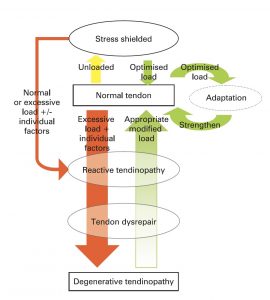
  • To have a more complete picture of the patient and her injury was extremely useful. I was able to ask further questions about dinghy racing and it turned out that she doesn’t complete any form of training in the ‘off-season.’ This once again raised my index of suspicion for an overuse injury as she had gone from doing very little sport-specific activities to training and racing at least once a week. This allowed me to provide some education to the patient about the importance of gradually increasing her training activity. Based on Cook and Purdam’s Tendinopathy Pathology Continuum (2009), I explained that overuse injuries tend to occur when the body is exposed to too much load, too often and doesn’t have enough time to repair. From this discussion, the patient could see how her training may have contributed to her pain and also disclosed that the pain started around the time she resumed dinghy racing this year.
    I should have probed a little further in regards to the patient’s training pattern. I think because she mentioned new information, relevant to the case, I felt like an overuse injury made sense and started treatment based on this clinical reasoning. However, if I had more information about her training volume, load and intensity I may have been able to provide highly individualised help and support.


 Conclusion 

  • Prior to this incident I have been allowing the subjective assessment to flow quite naturally and asked further questions where I felt I needed more information. However, for the time being it seems best to follow a set protocol so I don’t miss any information. I have a template subjective assessment form that I created a year ago based from a lecture.
  • I will keep this template open during my note-taking so I don’t miss any significant pieces of information like I did with this patient.


Revisiting Reflection


References

  • Cook, J., & Purdam, C. (200(). Is tendon pathology a continuum? A pathology model to explain the clinical presentation of load-induced tendinopathy.

Knee Pain – Pregnant Female

Thursday 5th August 2021

Hours: 5

Patient presentations:

  1. Knee pain Post-Trauma
  2. STM for non-specific LBP
  3. Suspected AS

Reflection Focus

  • Knee Pain Post-Trauma

Reflection Model

  • Gibbs Reflective Cycle 1988

What Happened?

  • Patient presented with knee pain after a traumatic ‘twisting’ episode. This was the patient’s 3rd visit and I had taken over the case from a previous practitioner. The patient was pregnant and in her 2nd trimester. The previous practitioner was treating the patient for a quadricep weakness, and I continued on the same treatment plan.


 What were you thinking and feeling? 

  • I remember thinking that treating the patient for a quadricep weakness didn’t seem to fit the MOI. Traumatic knee twisting episodes are linked to injuries to the ACL and meniscus; however, after completing the objective assessment there was no further presentation which would strongly indicate trauma to the ACL or meniscus. Furthermore, the patient presented to clinic with a reduction in their pain so, even though I was initially unsure about the diagnosis, I felt it was best to follow the plan prescribed by the previous practitioner as the patient was improving.


What was good and bad about the experience?

  • During the subjective assessment the patient had made a connection between moving less and a reduction in her pain. Furthermore, she had bought a brace to wear and had altered the way she walked up and downstairs due to her pain. Taking all these behaviours into consideration I was quite concerned that the patient was, or would soon be, beginning to avoid activity. Therefore, as the patient had seen a reduction in their pain, I spent time practicing some stair walking without her brace. The patient was pleasantly surprised that she could manage this pain free.


Analysis

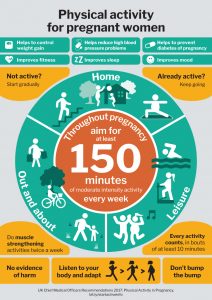
  • Women are advised to remain active throughout their pregnancy. (UK, Physical Activity Guidelines, 2019.) Inactivity, pregnant or not, can increase the chances of health conditions such as diabetes. (WHO, 2015.)
  • I believe that by taking the time to address what the patient had been avoiding not only gave them a positive outlook on their current MSK pain; but, also reduced the likelihood of continuing with this behaviour which could be detrimental, particularly during pregnancy.

 Conclusion 

  • Overall, I was happy with how I handled this appointment and that I identified yellow flags that were particularly important to address considering the patient was pregnant.

Revisiting Reflection


References

  • UK Chief Medical Officers’ Phsyical Activity Guidelines. (2019.) Physical Activity for Pregnant Women.
  • World Health Organisation (WHO.) (2015.) Physical Acitivity Strategy for the WHO European Region 2016-2025.

Knee and Bilateral Hip Pain

Monday 2nd August 2021

Hours: 5

Patient presentations:

  1. Suspected medial meniscus tear
  2. Shoulder pain localised to superior angle of scapula
  3. Knee and bilateral hip pain

Reflection Focus

  • Knee and bilateral hip pain

Reflection Model

  • Gibbs Reflective Cycle 1988

What Happened?

  • Patient’s 3rd appointment in clinic. The patient is an amateur runner reporting diffuse anterior knee pain and bilateral hip pain after road running. When completing her runs on a treadmill there is no px present in either the knee or the hips. At this stage of the rehabilitation process the pt reported that their hips were feeling much ‘stronger’ and they wanted to focus on their knee as it was causing them the most discomfort.

 What were you thinking and feeling? 

  • This session was a positive experience. The pt. was happy with their progress, so I felt confident in the exercise prescription to date. I also feel more confident in treating knee pathologies as a lot of my academic writing pieces have revolved around lower limb anatomy, biomechanics and pathologies.

What was good and bad about the experience?

  • It was beneficial to identify an opportunity where I could put theory into practice. I felt I led the assessment with confidence and authority which is an element of my practice I know I struggle with. However, the highlight of this experience was certainly the patient’s optimism towards her pain. She was happy with her progress to date and seemed confident that her pain would continue to diminish. Patients who experience any form of psychological distress are at risk of poorer health outcomes and MSK pain, acute or chronic, induces some form of stress. (Jones & Rivett, 2018.) In this instance, the patient wasn’t displaying any fear-avoidance behaviours, she was eager to progress with her rehabilitation and accepted that her pain, although bothersome to her, would reduce. Overall, I believed the patient did not present with any yellow flags and that her psychological resilience to her pain would ultimately aid in her recovery.

Analysis

  • This experience has highlighted that there are still many aspects of my practice where I have some theoretical understanding but haven’t necessarily been able to experience a practical application.  As a result, I don’t feel as confident in these areas. This is likely due to lack of exposure and challenging situations. For example, I am yet to treat a wrist pathology. Naturally, as I don’t have any patients with a wrist injury I haven’t done much, if any, wider reading in this area. Whereas, knee, hip, back and ankle injuries are more prevalent in the current clinical setting so my wider reading has been around helping these individuals. Although I don’t feel like this is necessarily a bad thing it has helped identify that I should still be keeping up with my theoretical knowledge and expertise in other areas that I am weaker in. I believe that having some theoretical underpinnings helped me to feel confident and self-assured in myself as a student practitioner on this day. Therefore, maintaining self-directed reading and research will be key in me feeling like a well-rounded practitioner.

 Conclusion 

  • I will aim to make a conscious effort, on the occasions where I don’t have a patient, to pair up with someone who has a patient with a pathology I haven’t yet been exposed to.


Revisiting Reflection


References

  • Hammerich, A., Scherer, S., & Jones, A. (2018). Influence of Stress, Coping ad Social Factors on Pain and Disability in Musculoskeletal Practice, In Mark A Jones, & Darren Rivett (Eds.), Clinical Reasoning in Musculoskeletal Practice – E-Book. (2nd ed.) (pp.47-70) Elsevier.